
Showing all 3 results

Honor Held Dear
by Alan Eschbach $4.99 – $35.95Price range: $4.99 through $35.95
by Alan Eschbach
What motivates people to follow the lead of another person—to sometimes suppress their own fears, desires, and needs and to adopt a leader’s vision as their own? It’s a question that anyone in, or who aspires to, a leadership position should ask.
In this uplifting and often humorous account, Captain Alan Eschbach, USN (Ret) reflects on his life experiences and how he used them to create his own code of leadership, behavior, and ethics. Using snapshots of his early life in the tiny village of Rawlinsville, Pennsylvania and recollections from the navy, from SEAL training to captaincy of the guided missile destroyer USS Arleigh Burke, Alan shares his insights into what can be gained by working without compensation, the pain and joy of leaving the comfort of home and community, and the value of repeatedly testing one’s physical and mental limits. Most importantly, this book is an account of how an unwavering commitment to personal honor and integrity, and an even greater devotion to serving others can lead to positive change.
Honor Held Dear: My View from the Bridge Wing is a portrait of leadership as a calling. Moreover, it’s a challenge to leaders everywhere to take stock of their leadership styles as a measure of their understanding of sacrifice and duty.
Last, it is Alan’s way of saying thank you—to the community and people who shaped and inspired him, and to everyone who granted him the great privilege and profound honor of leadership.
Serenity: How to Recognize, Understand, and Recover from Behavioral Addictions
$26.95
written by Sanja Rozman
Life can be hard—so why not use whatever avenues you can to make it easier? Overindulging in drugs and alcohol only makes problems worse, but what could be wrong with using video games, gambling, comfort food, social media, romance, or sex to add some comfort to your life? Unfortunately, while engaging in comforting behaviors can initially seem less dangerous and more socially acceptable than smoking or drinking too much alcohol, the chemistry of addiction is not wholly tied to a substance, but rather to the brain’s response. This leads some people to develop diseases called behavioral addictions—which work just like other addictions, but without any substance involved.
Serenity is your go-to manual for understanding and overcoming behavioral addictions. It answers many questions you may have about behavioral addiction:
How can you recognize and understand behavioral addictions?
How do people develop behavioral addictions?
When it comes to activities like engaging with social media, gaming, working, or dieting, how much is too much?
How can someone become addicted to something everybody does?
How can you know if you’re helping or enabling your addicted loved one?
Are you an addict yourself—and if so, how can you recover?
In this book, renowned psychotherapist Sanja Rozman will answer these questions and help you create your own personal, state-of-the-art recovery plan. Her program has helped her clients discover the reasoning behind their destructive behaviors, work through them, and establish new, healthier patterns in their lives and relationships. Whether you are suffering yourself or are a family member, teacher, or good friend of an addict, you will learn everything you need to know about how to recognize, understand, and cope with behavioral addictions. You can’t just stop them—but you can work through the problem. It works if you work it!
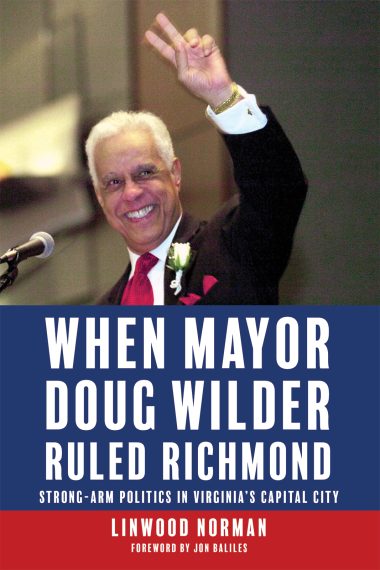
When Mayor Doug Wilder Ruled Richmond: Strong-Arm Politics in Virginia’s Capital City
$9.99 – $35.95Price range: $9.99 through $35.95
written by Linwood Norman
Our nation’s first elected Black governor, L. Douglas Wilder, returned to public service in 2005 as the first popularly elected mayor of Richmond, Virginia in nearly sixty years. Despite his landslide election, voters may have had little idea what they were getting themselves into, as many were ill-prepared for Wilder’s strong style of leadership. He had remarkable success in reducing crime, cutting government spending, and boosting economic vitality, but Wilder’s relationship with City Council and the School Board—and the disagreements that ensued from both sides—tarnished his record as mayor. Author and former press secretary to the mayor, Linwood Norman, skillfully recounts the turmoil of Richmond’s transition to the “strong mayor” model of local government during what was a memorable chapter in Richmond’s rich political history that is still deliberated today, more than fifteen years after Wilder’s charismatic tenure concluded.